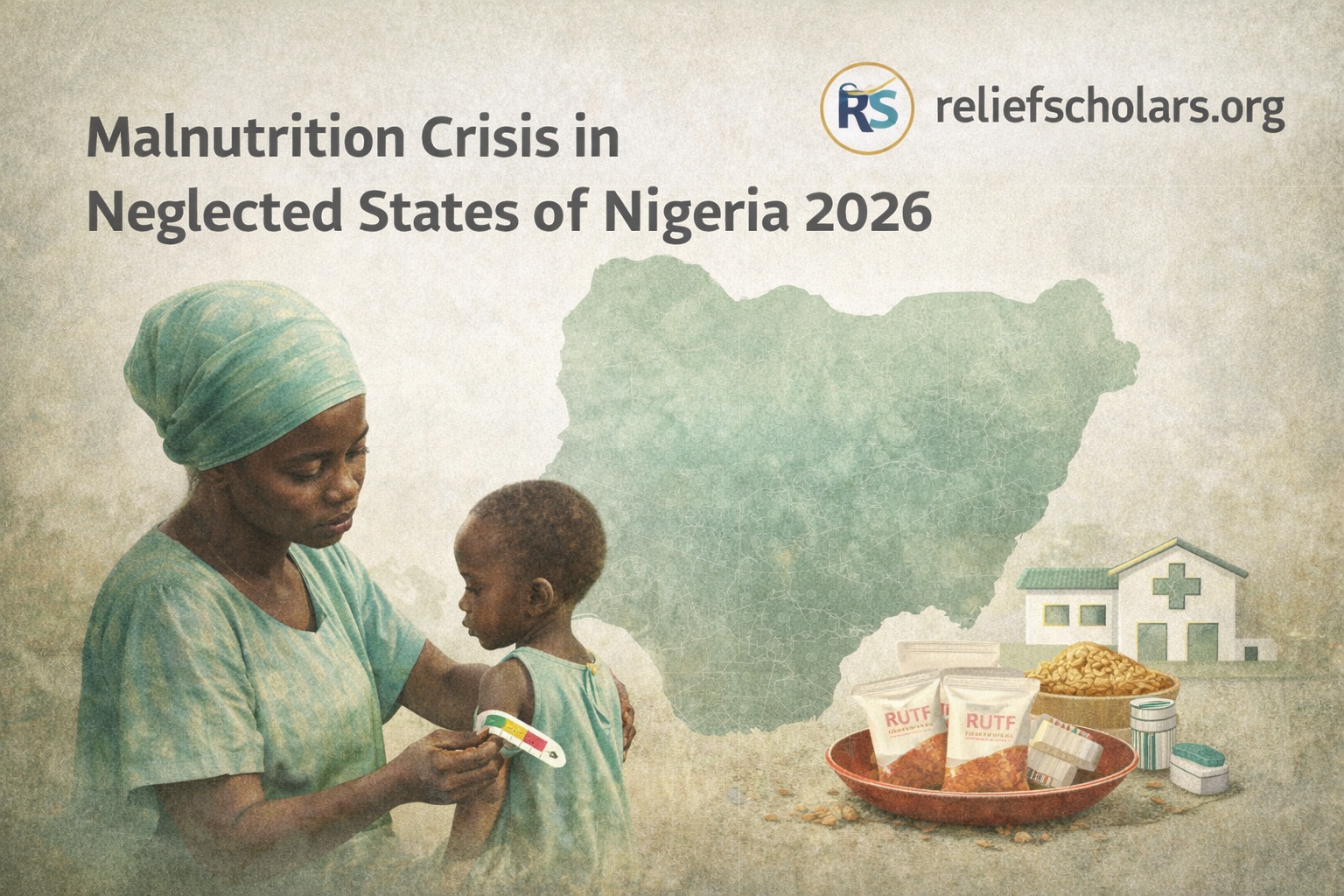
In April 2025, the Nigerian government declared a national emergency on food security, signaling one of the most severe nutrition crises in decades. While attention often focuses on conflict-affected northeastern states, new humanitarian assessments reveal that several neglected states in Nigeria 2026 are experiencing alarming levels of malnutrition, fragile health systems, and collapsing livelihoods.
Recent findings from humanitarian actors show that malnutrition is no longer isolated to traditional high-risk zones. Instead, a widening belt of vulnerability now stretches across states that historically received limited emergency support.
This article examines:
- Why these states are now considered neglected
- What the latest malnutrition needs assessment reveals
- The breakdown of health and nutrition systems
- The broader economic and climate shocks fueling the crisis
- Why urgent humanitarian expansion is critical in 2026
Nigeria’s Food Security Emergency: A Dangerous Convergence of Shocks
The current crisis is not caused by one factor alone. It represents a convergence of systemic shocks:
1. Prolonged Conflict
- Insurgency in the northeast
- Banditry in the northwest
- Over 3 million displaced persons
- Destruction of agricultural livelihoods
- Restricted humanitarian access
2. Climate Extremes
- Devastating floods in 2024
- Prolonged droughts afterward
- Crop failures
- Livestock losses
- Ecosystem degradation
3. Economic Shock
- Fuel subsidy removal in 2024
- 60% surge in food prices
- 20% cuts to state health budgets
- Rising inflation
- Reduced purchasing power
Together, these factors have created what humanitarian experts describe as a “perfect storm.”
Read also:commCommon Endemic Diseases in Nigeria 2026: Causes, Impact, Prevention & Public Health Response
Collapse of Critical Protection Systems
One of the most alarming indicators of Nigeria’s humanitarian decline is the collapse of essential public health infrastructure.
By late 2024:
- Only 20% of Nigeria’s 34,000 primary healthcare centers were fully functional.
- Less than 20% of Severe Acute Malnutrition (SAM) cases were treated in health facilities.
- Outpatient Therapeutic Programmes (OTPs) were severely limited.
This system breakdown means that even when children are identified as malnourished, treatment services are often unavailable.
The Ten Neglected States Identified in 2026
Following rising reports of malnutrition outside traditional humanitarian zones, a Malnutrition Needs Assessment was conducted in January 2026 across ten states:
- Abia
- Bauchi
- Cross River
- Gombe
- Jigawa
- Kaduna
- Kebbi
- Kogi
- Kwara
- Ogun
These states are now increasingly described as neglected states in Nigeria 2026 because they:
- Were not primary humanitarian targets previously
- Showed rising malnutrition indicators
- Have weak referral pathways
- Experience severe stock shortages of therapeutic supplies
What the Needs Assessment Revealed
The findings were deeply concerning.
Screening Gaps
- 52% of households reported children had not been screened for malnutrition using MUAC in the previous six months.
- Weak referral pathways after screening.
Service Availability
- Only 45% of facilities had dedicated SAM/MAM services.
- 55% lacked specialized acute malnutrition services.
Medicine and Supply Shortages
- Only 38% confirmed availability of essential medicines.
- 24% had sufficient therapeutic food and micronutrient supplements.
- 76% reported stock shortages.
Child Malnutrition Statistics: A Humanitarian Alarm
A total of 8,015 children under five were screened across the ten states.
Results:
- 3,177 (40%) classified as green
- 2,268 (28%) classified as yellow (moderate malnutrition)
- 2,570 (32%) classified as red (severe malnutrition)
This means over 60% of sampled children under five are affected by malnutrition.
This level of acute and moderate malnutrition signals a full-scale humanitarian emergency.
Chronic Malnutrition: A Human Capital Crisis
Beyond immediate hunger, chronic malnutrition affects over 53% of children under five in worst-affected areas.
Long-term consequences include:
- Impaired cognitive development
- Reduced educational attainment
- Lower lifetime earnings
- Increased susceptibility to disease
- Intergenerational poverty cycles
Malnutrition is not only a health crisis — it is a development crisis.
Why These States Became Neglected
1. Shifting Humanitarian Priorities
International funding often prioritizes conflict epicenters, leaving secondary states underserved.
2. Underreported Data
Delayed surveillance systems masked the severity of malnutrition trends.
3. Health Budget Cuts
20% reduction in state health budgets weakened service delivery.
4. Rural Livelihood Collapse
Farmers and herders face insecurity, extortion, and environmental degradation.
5. Inflation and Food Price Surge
A 60% increase in food prices disproportionately affects poor households.
Economic and Livelihood Breakdown
The humanitarian emergency extends beyond nutrition.
Rural Value Chain Collapse
- Abandoned farmlands
- Reduced livestock production
- Limited market access
- Rising input costs
Youth Unemployment
Particularly severe among:
- Young women
- Marginalized communities
- Displaced youth
This economic stagnation increases vulnerability to:
- Migration
- Criminal exploitation
- Gender-based violence
The Expanding Humanitarian Appeal to December 2026
Following assessment results, the humanitarian appeal has been extended to:
- Expand interventions to all ten newly identified states
- Scale nutrition programming
- Strengthen primary healthcare capacity
- Improve referral systems
- Restore therapeutic food supply chains
The revised appeal aims to continue interventions through December 2026.
What Immediate Interventions Are Needed?
1. Expand MUAC Screening Coverage
Community-based screening must reach 100% of at-risk households.
2. Strengthen Outpatient Therapeutic Programmes (OTPs)
Increase operational sites and trained staff.
3. Restore Supply Chains
Ensure continuous availability of:
- Ready-to-Use Therapeutic Food (RUTF)
- Micronutrient supplements
- Essential medicines
4. Support Livelihood Recovery
Cash transfers and agricultural support programs are essential.
5. Rebuild Primary Healthcare Infrastructure
Rehabilitate non-functional PHCs and replenish health worker capacity.
Why This Crisis Matters Globally
Nigeria’s population exceeds 200 million people.
Unchecked malnutrition:
- Increases regional instability
- Fuels migration pressures
- Weakens economic productivity
- Undermines long-term development goals
Food security in Nigeria is a regional and global stability issue.
Frequently Asked Questions
What are the neglected states in Nigeria 2026?
Ten states including Abia, Bauchi, Cross River, Gombe, Jigawa, Kaduna, Kebbi, Kogi, Kwara, and Ogun are experiencing rising malnutrition outside traditional humanitarian focus areas.
Why is malnutrition increasing in Nigeria?
Conflict, climate shocks, economic crisis, and health system collapse have converged to increase food insecurity.
How many children are affected?
Over 60% of sampled children under five in assessed states showed signs of acute or moderate malnutrition.
What is Severe Acute Malnutrition (SAM)?
SAM is a life-threatening condition requiring urgent medical and therapeutic food treatment.
Conclusion: A Critical Moment for Nigeria’s Neglected States
The 2026 needs assessment reveals a stark reality: malnutrition is expanding into states previously considered stable. These neglected states in Nigeria 2026 are now at the frontline of a worsening food security and public health emergency.
Without urgent intervention:
- Child mortality will rise
- Human capital losses will deepen
- Poverty cycles will intensify
Nigeria’s humanitarian response must adapt quickly to evolving vulnerability patterns. Expansion of nutrition programming, restoration of healthcare systems, and livelihood stabilization are not optional — they are urgent.
The time to act is now.

1 Comment.
Comments are closed.