Emergency First Aid & Basic Life Support (BLS)
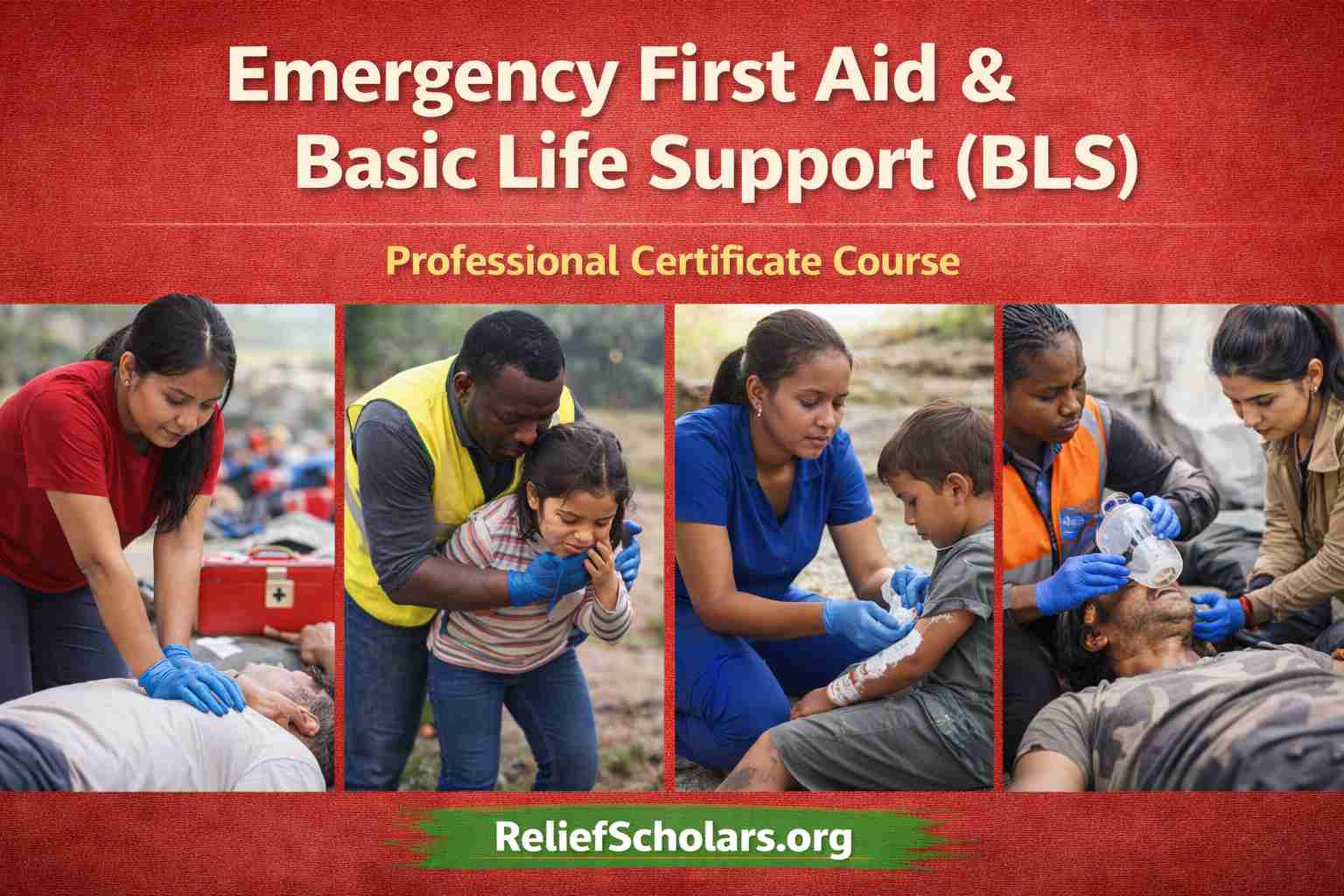
About Course
The Emergency First Aid & Basic Life Support (BLS) course provides essential knowledge and practical skills needed to respond effectively to medical emergencies before professional healthcare arrives.
In many humanitarian and community settings, immediate medical assistance may not be available. First responders—including humanitarian workers, volunteers, teachers, and community members—must be prepared to provide life-saving interventions.
This course covers essential emergency response principles, scene safety, patient assessment, cardiopulmonary resuscitation (CPR), choking response, bleeding control, shock management, and stabilization techniques for injured individuals.
Participants will gain the confidence and skills needed to respond safely and effectively in emergency situations.
Upon successful completion, learners will receive a Professional Certificate of Completion from ReliefScholars.
What Will You Learn?
- Understand the principles of emergency response and first aid
- Assess emergency situations and ensure scene safety
- Perform basic patient assessment
- Apply Basic Life Support (BLS) techniques including CPR
- Respond to choking emergencies
- Control bleeding and manage wounds
- Recognize and manage shock
- Provide first aid for burns, fractures, and other injuries
- Stabilize patients until professional medical help arrives
Course Content
Module 1: Introduction to Emergency First Aid
Introduces the principles of first aid and the role of a first responder.
-
What is First Aid?
-
Roles and Responsibilities of a First Responder
-
Legal and Ethical Considerations
-
Personal Safety in Emergencies
Module 2: Scene Safety and Emergency Assessment
Focuses on assessing emergencies safely.
-
Scene Safety and Risk Assessment
-
Primary Assessment (ABC Approach)
-
Calling for Emergency Help
-
Patient Communication
Module 3: Basic Life Support (BLS) Fundamentals
Introduces life-saving principles.
-
Understanding Cardiac Arrest
-
Chain of Survival
-
Recognizing Life-Threatening Emergencies
-
Recovery Position
Module 4: Cardiopulmonary Resuscitation (CPR)
Practical lifesaving technique.
-
Adult CPR Steps
-
CPR for Children and Infants
-
Hands-Only CPR
-
Common CPR Mistakes
Module 5: Managing Choking Emergencies
Responding to airway obstruction.
-
Responding to airway obstruction.
-
Abdominal Thrusts (Heimlich Maneuver)
-
Choking Response for Children and Infants
-
When to Seek Medical Help
Module 6: Bleeding Control and Wound Care
Critical trauma response.
-
Types of Bleeding
-
Applying Direct Pressure
-
Bandaging Techniques
-
Infection Prevention in Wound Care
Module 7: Managing Shock and Medical Emergencies
Recognizing and stabilizing serious conditions.
-
Signs and Symptoms of Shock
-
Immediate Response Actions
-
Fainting and Unconsciousness
-
Heat and Cold Emergencies
Module 8: First Aid for Injuries
Handling common injuries.
-
Burns and Scalds
-
Fractures and Sprains
-
Head Injuries
-
Transporting Injured Persons
Module 9: Emergency Scenarios & Practical Application
Applying skills in real situations.
-
Community Emergency Scenario
-
Road Accident Case Study
-
Humanitarian Field Response
-
Course Review & Assessment Preparation
Final Quiz Assessment
Course: Emergency First Aid & Basic Life Support (BLS)
Platform: ReliefScholars
Assessment Type: Comprehensive Final Quiz
Total Marks: 100 Marks
This assessment evaluates your understanding of key concepts covered throughout the course, including emergency response principles, Basic Life Support (BLS), injury management, and humanitarian emergency scenarios.
Answer all questions carefully.
-
Emergency First Aid & Basic Life Support (BLS)
Student Ratings & Reviews
Because I have and Interest in studying. About health line
Is very nice emergency training
Thank you very much for the wonderful and consice training materials