Published: 1 November 2025 | By ReliefScholars Humanitarian Insights
Source: Save the Children Analysis on World Food Day 2025, Reliefweb
The Alarming Reality of Child Hunger in 2025
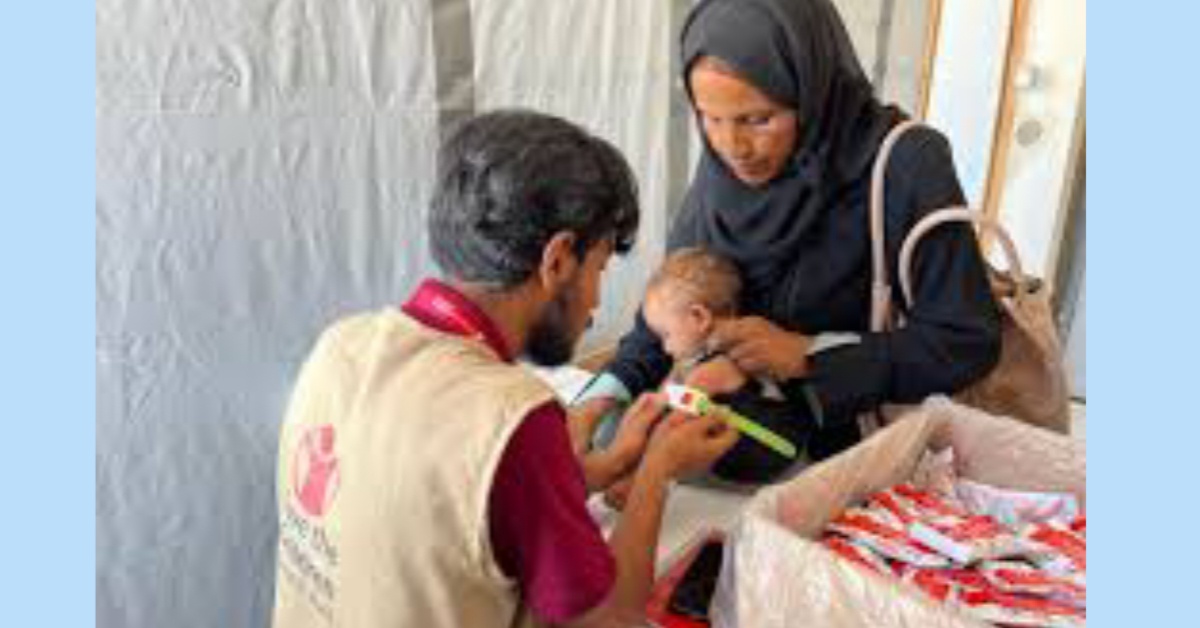
In 2025 alone, an estimated 118 million children have been pushed into hunger — and more than 63 million of them are suffering primarily because of armed conflict, according to a new analysis released by Save the Children on World Food Day.
The findings, based on global hunger data from the Integrated Food Security Phase Classification (IPC), reveal that conflict is the single most powerful driver of child hunger today — surpassing drought, economic instability, and other environmental causes.
When War Becomes a Cause of Hunger
Among the 18 million children facing emergency levels of hunger (IPC Phase 4 and above) across more than 35 crises, over 11 million — or 61% — live in conflict-affected areas.
This data underscores a devastating truth: violence and warfare now fuel the world’s worst food crises.
Conflict disrupts farming, destroys livelihoods, and displaces families from their homes. It also blocks humanitarian access — leaving children without the nutrition they need to grow, learn, and survive. In some cases, starvation itself is being used as a weapon of war.
Crisis Hotspots: Sudan and Gaza
The hunger emergencies in Sudan and Gaza highlight the human toll of these crises.
-
In Gaza, over 500,000 people — half of them children — are already experiencing catastrophic hunger.
-
In Sudan, 638,000 people, including hundreds of thousands of children, face similar conditions.
Millions more in both countries are just one step away from famine.
Restricted access to aid, active conflict, and collapsing systems of health and food supply have left these children at extreme risk of death and malnutrition.
“Famine Today Is Manmade — and Preventable”
Hannah Stephenson, Save the Children’s Head of Advocacy for Hunger and Nutrition, describes 2025 as “a devastating year for children living in conflict zones.”
She notes:
“Famine in the twenty-first century is manmade and preventable. No child should die from hunger today. Without enough food or the right nutrition, children can’t learn, play, or grow. Ending hunger requires urgent political action — not just food aid.”
Stephenson emphasizes that the international community must act now to:
-
End armed conflicts that drive food insecurity.
-
Protect and invest in the first 1,000 days of a child’s life — when nutrition has the most lasting impact.
-
Strengthen global food and health systems to withstand future crises.
Save the Children’s Response
For over a century, Save the Children has worked to protect vulnerable children worldwide. Between 2022 and 2024, the organization supported 43.5 million children and families through nutrition programs, cash transfers, and humanitarian assistance.
However, as conflicts spread and funding gaps widen, these life-saving efforts are increasingly at risk.
The Humanitarian Call to Action
Hunger is not inevitable — it is a political and moral challenge. To break this cycle, humanitarian actors and world leaders must prioritize:
-
Peacebuilding and conflict resolution,
-
Unrestricted humanitarian access, and
-
Sustained investment in food security and child nutrition.
Every child deserves more than survival — they deserve a future free from hunger and fear.
Sources:
Save the Children analysis using IPC and Global Report on Food Crises 2025 data.
For detailed methodology and full data breakdown, visit www.ipcinfo.org and Save the Children Global News.
Media Contact:
📧 Aisha Majid — aisha.majid@savethechildren.org
🌍 Follow @Save_GlobalNews on X for live updates and reports.