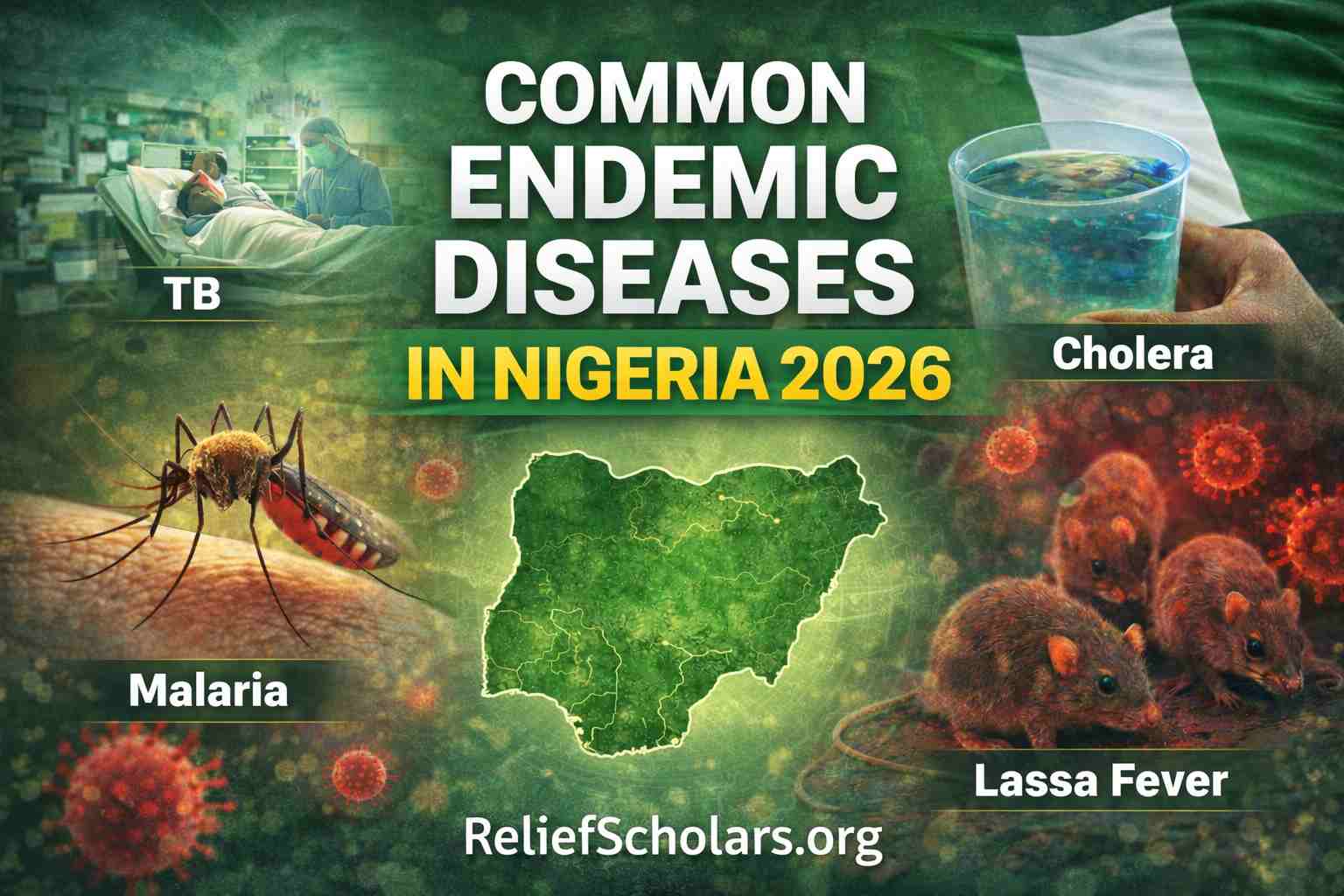
Common endemic diseases in Nigeria 2026 continue to shape the country’s public health landscape despite decades of intervention efforts. While global health attention often focuses on pandemics and emerging outbreaks, endemic diseases remain the silent and persistent burden affecting millions of Nigerians every year.
An endemic disease is one that is consistently present within a specific geographical area. Unlike epidemics, which occur suddenly and spread rapidly, endemic diseases maintain a steady presence within communities. In Nigeria, several infectious diseases have become deeply rooted due to environmental, socioeconomic, and structural factors.
In 2026, Nigeria continues to face challenges such as:
- Rapid population growth
- Urban overcrowding
- Climate-related flooding
- Weak sanitation infrastructure
- Healthcare access inequality
- Poverty and malnutrition
For humanitarian organizations, policymakers, health workers, and communities, understanding endemic diseases is critical to designing sustainable prevention strategies and reducing avoidable deaths.
This article provides a comprehensive analysis of:
- The most common endemic diseases in Nigeria in 2026
- Why they persist
- Their economic and social impact
- Public health responses
- What individuals and NGOs can do
What Does “Endemic Disease” Mean?
An endemic disease is a disease that:
- Is consistently present within a region
- Affects a predictable number of people annually
- Does not disappear completely
- Is influenced by environmental and social conditions
Difference Between Endemic, Epidemic, and Pandemic
- Endemic: Constant presence in a specific region
- Epidemic: Sudden increase in cases above expected levels
- Pandemic: Epidemic spread across multiple countries or continents
Many endemic diseases in Nigeria periodically become epidemic during seasonal surges, especially during rainy seasons or flooding periods.
Overview of Nigeria’s Disease Burden in 2026
Nigeria, Africa’s most populous country, carries one of the highest infectious disease burdens on the continent. In 2026, endemic diseases remain major contributors to:
- Under-five mortality
- Maternal mortality
- Reduced life expectancy
- Lost productivity
- Health system strain
Urban vs Rural Health Disparities
Urban centers experience:
- Overcrowding
- Poor waste management
- Slum settlements
- Water contamination
Rural areas struggle with:
- Limited access to healthcare facilities
- Fewer trained health workers
- Vaccine coverage gaps
- Poor disease surveillance
Conflict and Displacement
Insecurity in parts of northern Nigeria has increased the number of internally displaced persons (IDPs), creating environments where infectious diseases spread rapidly due to:
- Poor sanitation
- Overcrowding
- Inadequate clean water supply
Top Common Endemic Diseases in Nigeria 2026
1. Malaria
Malaria remains the most common endemic disease in Nigeria.
Why Malaria Is Endemic
- Tropical climate supports mosquito breeding
- Stagnant water accumulation
- Inadequate drainage systems
- Limited use of insecticide-treated nets
Children under five and pregnant women remain the most vulnerable populations.
Humanitarian Impact
- School absenteeism
- High household medical spending
- Reduced workforce productivity
Despite distribution of mosquito nets and antimalarial drugs, drug resistance and inconsistent usage hinder full elimination.
2. Lassa Fever
Lassa fever remains endemic in several states, particularly in rural communities.
Transmission
- Contact with food contaminated by rodent urine
- Poor household sanitation
- Human-to-human transmission in hospitals
Challenges
- Late hospital presentation
- Limited laboratory capacity in remote areas
- High case fatality rate
Healthcare workers remain at risk without strict infection control measures.
3. Cholera
Cholera outbreaks occur frequently, especially during flooding seasons.
Causes
- Contaminated water sources
- Poor waste disposal
- Overcrowded IDP camps
Flooding worsens the situation by mixing sewage with drinking water sources.
Humanitarian Concern
Cholera spreads rapidly in vulnerable communities with limited healthcare access.
4. Tuberculosis (TB)
Nigeria remains among countries with high TB burden.
Contributing Factors
- Overcrowding
- Poor ventilation
- HIV co-infection
- Malnutrition
Drug-resistant TB is emerging as a serious public health concern due to incomplete treatment adherence.
5. HIV/AIDS
HIV remains endemic, though prevalence has stabilized in recent years.
Key Challenges
- Youth vulnerability
- Stigma
- Low testing rates
- Inconsistent access to antiretroviral therapy (ART) in rural areas
Nigeria has expanded ART coverage, but gaps remain.
6. Yellow Fever
Yellow fever continues to occur due to:
- Mosquito vectors
- Low vaccination coverage in some communities
- Migration and cross-border movement
Mass vaccination campaigns have reduced outbreaks but elimination remains difficult.
7. Typhoid Fever
Typhoid fever persists due to:
- Unsafe water consumption
- Poor food hygiene
- Misdiagnosis as malaria
Antibiotic resistance complicates treatment outcomes.
8. Measles
Measles outbreaks still occur in regions with:
- Low immunization coverage
- Conflict-related vaccine disruptions
- Weak primary healthcare outreach
Children are particularly vulnerable.
9. Hepatitis B and C
Hepatitis infections are often undiagnosed due to limited screening programs.
Risks
- Mother-to-child transmission
- Unsafe blood transfusions
- Limited vaccination awareness
Long-term liver complications increase healthcare burden.
10. Cerebrospinal Meningitis
Northern Nigeria lies within the “meningitis belt.”
Seasonal Pattern
- Peaks during dry seasons
- Spread in overcrowded settings
Vaccination campaigns reduce risk but outbreaks still occur.
Why These Diseases Persist in Nigeria
1. Poor Sanitation & Water Access
Millions lack access to clean drinking water. Open defecation and improper waste disposal increase contamination risks.
2. Climate Change & Flooding
Floods contaminate water supplies and expand mosquito breeding grounds.
3. Poverty & Malnutrition
Malnutrition weakens immune systems, increasing susceptibility.
4. Weak Primary Healthcare System
Limited funding and infrastructure gaps slow early detection and response.
5. Low Health-Seeking Behavior
Many individuals self-medicate or delay hospital visits.
6. Conflict & Displacement
IDP camps create high-risk environments for outbreaks.
Regional Distribution of Endemic Diseases
- Northern Nigeria: Meningitis, cholera, measles
- Niger Delta: Malaria, water-borne infections
- Urban slums: Typhoid, tuberculosis
- Conflict zones: Cholera and measles outbreaks
Geographical and environmental differences influence disease patterns.
Economic and Social Impact
Endemic diseases significantly affect Nigeria’s development.
Economic Impact
- Reduced labor productivity
- Increased healthcare costs
- Strain on government health budgets
Social Impact
- School dropout rates
- Increased orphanhood due to HIV
- Household poverty cycles
Chronic disease burden slows national development goals.
Nigeria’s Public Health Response in 2026
Nigeria has strengthened:
- Disease surveillance systems
- Vaccination campaigns
- Community health worker programs
- Laboratory capacity
Digital health reporting tools improve outbreak tracking.
International partnerships also provide technical and funding support.
Role of NGOs & Humanitarian Organizations
NGOs contribute through:
- Water sanitation projects
- Mobile clinics
- Health education campaigns
- Vaccination outreach
- Distribution of mosquito nets
Humanitarian organizations bridge service gaps in underserved communities.
How Individuals Can Protect Themselves
Practical preventive measures include:
- Sleeping under treated mosquito nets
- Boiling drinking water
- Practicing hand hygiene
- Completing vaccination schedules
- Seeking early medical attention
- Improving household sanitation
Community awareness remains essential.
Future Outlook: Can Nigeria Reduce Endemic Disease Burden?
With sustained investment in:
- Universal health coverage
- Environmental sanitation
- Climate adaptation infrastructure
- Youth health education
Nigeria can significantly reduce endemic disease burden.
However, funding constraints and population growth remain challenges.
Frequently Asked Questions
What are the most common endemic diseases in Nigeria?
Malaria, cholera, tuberculosis, HIV/AIDS, Lassa fever, yellow fever, typhoid, measles, hepatitis, and meningitis remain the most common endemic diseases.
Why is malaria still common in Nigeria?
Favorable climate, mosquito breeding sites, and inconsistent prevention practices sustain malaria transmission.
Is cholera endemic in Nigeria?
Yes, cholera remains endemic with seasonal outbreaks, especially during floods.
What diseases are most dangerous in Nigeria?
Malaria, tuberculosis, HIV/AIDS, and Lassa fever cause significant mortality.
How can Nigeria control endemic diseases?
Through improved sanitation, vaccination, early detection, healthcare funding, and public awareness.
Conclusion
Common endemic diseases in Nigeria 2026 continue to pose serious humanitarian and public health challenges. While progress has been made in surveillance and vaccination, structural issues such as poverty, sanitation gaps, climate change, and healthcare inequality sustain transmission.
Reducing endemic diseases requires:
- Government commitment
- Community participation
- NGO collaboration
- Individual responsibility
With sustained action and strategic investments, Nigeria can significantly lower disease burden and improve population health outcomes.

1 Comment.
Comments are closed.