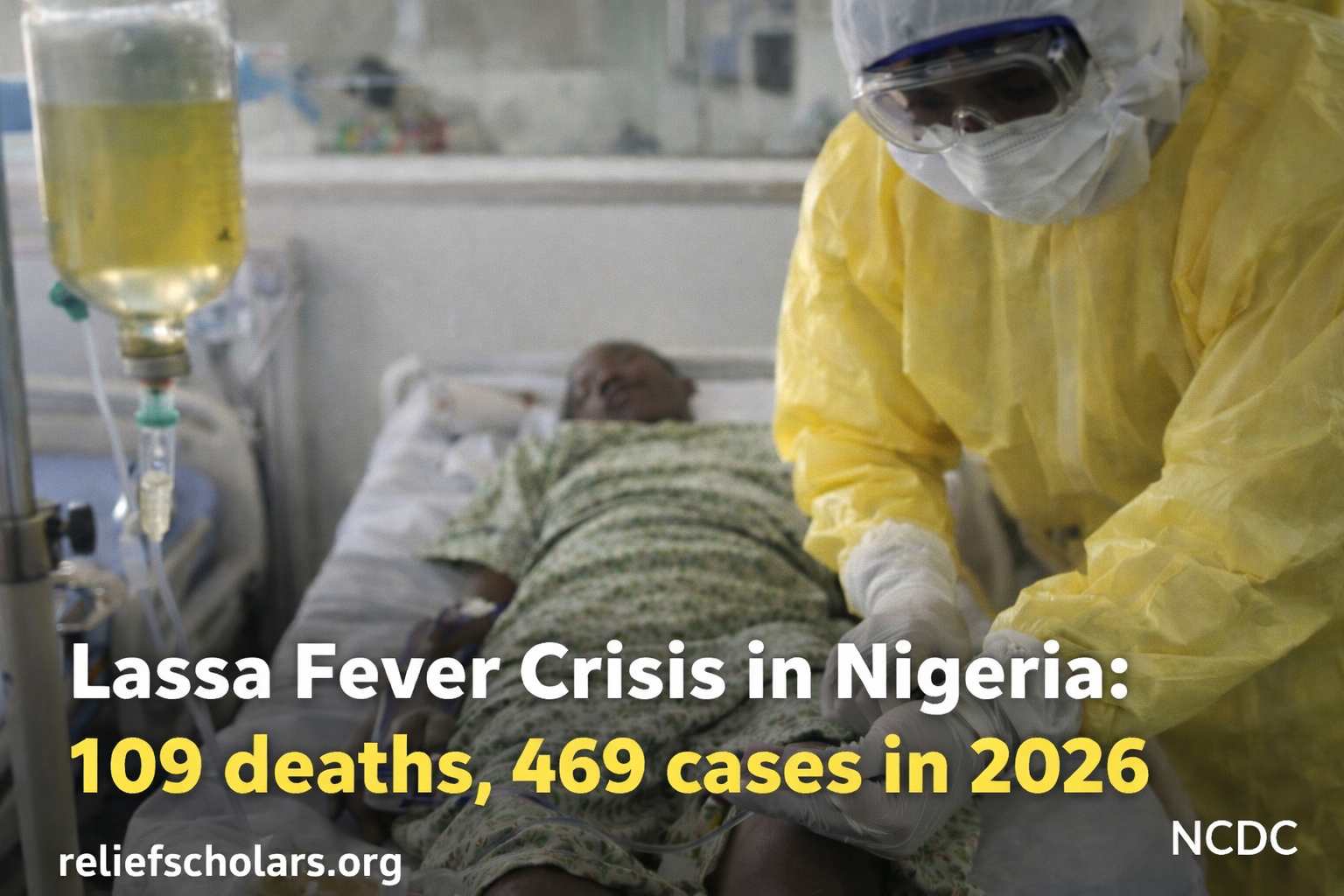
Nigeria is once again facing a growing public health challenge as the Nigeria Centre for Disease Control and Prevention (NCDC) reports a worrying increase in Lassa fever cases and deaths in 2026.
According to the latest epidemiological data, the country has recorded 469 confirmed cases and 109 deaths, resulting in a case fatality rate (CFR) of 23.2%. This marks a significant rise compared to the 18.7% fatality rate recorded during the same period in 2025, highlighting the urgent need for strengthened response and prevention efforts.
Behind these numbers are real lives, families, and communities affected by a disease that continues to challenge Nigeria’s health system.
1. Understanding Lassa Fever
Lassa fever is a viral hemorrhagic illness caused by the Lassa virus. It is primarily transmitted to humans through:
- Contact with food or water contaminated by rodent urine or feces.
- Exposure to infected household items.
- Direct contact with the bodily fluids of infected persons.
The disease is endemic in Nigeria and tends to surge during the dry season, when human contact with rodents increases due to environmental factors and agricultural practices.
2. Current Situation: What the Data Shows
Between Week 1 and Week 9 of 2026, Nigeria recorded:
- 2,446 suspected cases.
- 469 confirmed cases.
- 4 probable cases.
- 109 deaths.
During the most recent reporting week, 65 new confirmed cases were recorded. While this is a slight decrease from 77 cases in the previous week, the overall trend remains concerning due to the high fatality rate.
States Most Affected
The outbreak has impacted multiple states, with 86% of confirmed cases concentrated in just five states:
- Bauchi
- Ondo
- Taraba
- Benue
- Edo
The remaining 14% of cases are spread across 13 other states, including Plateau and Nasarawa. In total, 18 states and 69 Local Government Areas (LGAs) have recorded at least one confirmed case in 2026.
3. Healthcare Workers at Risk
One of the most alarming aspects of the 2026 outbreak is the increasing number of infections among healthcare workers:
- 6 healthcare workers were infected in the latest reporting week alone.
- 37 healthcare workers have been infected so far in 2026.
This highlights critical gaps in infection prevention and control (IPC) measures. Healthcare workers are at high risk due to:
- Direct contact with infected patients before diagnosis.
- Inadequate personal protective equipment (PPE) in some facilities.
- Delayed diagnosis of cases due to non-specific early symptoms.
4. Response Efforts by Health Authorities
The NCDC has activated a national Lassa fever Incident Management System to coordinate response actions, including:
- Intensified Surveillance: Active case searches in affected communities and improved reporting systems.
- Contact Tracing: Identifying and monitoring individuals exposed to confirmed cases to prevent further spread.
- Rapid Response Deployment: National teams deployed to high-burden states to provide technical support.
- Infection Prevention and Control (IPC): Distribution of PPE and implementation of targeted control strategies.
- Clinical Support: Strengthening treatment centers and providing clinical management training.
5. Challenges in Containing the Outbreak
Despite ongoing efforts, several challenges hinder the effective control of Lassa fever in Nigeria:
- Late Presentation: Many patients delay seeking care until the illness is advanced, increasing the risk of death.
- Cost of Treatment: High medical costs often discourage individuals from seeking early care.
- Environmental Sanitation: Poor waste management and food storage increase human-rodent contact.
- Resource Gaps: Ensuring a steady supply of PPE and Ribavirin to all frontline facilities remains a logistical challenge.
6. Recommendations for Prevention
For Communities and Households:
- Keep homes and surroundings clean to discourage rodent nesting.
- Store food in rodent-proof containers (e.g., plastic or metal bins).
- Maintain proper personal hygiene, including regular handwashing.
- Seek medical care immediately if you experience fever, headache, or general body weakness.
For Healthcare Workers:
- Maintain a high index of suspicion for Lassa fever in all patients with fever.
- Follow strict standard precautions and IPC measures for all patients.
- Consistently use PPE when handling bodily fluids.
- Ensure early referral of suspected cases to designated treatment centers.
Conclusion
The latest data from the NCDC serves as a critical reminder that Lassa fever remains a serious public health threat in Nigeria. Addressing this crisis requires more than just medical intervention; it requires a collective effort to improve early detection, protect our frontline workers, and maintain environmental hygiene.
The fight against Lassa fever is about saving lives, protecting vulnerable communities, and building a resilient health system for Nigeria’s future.