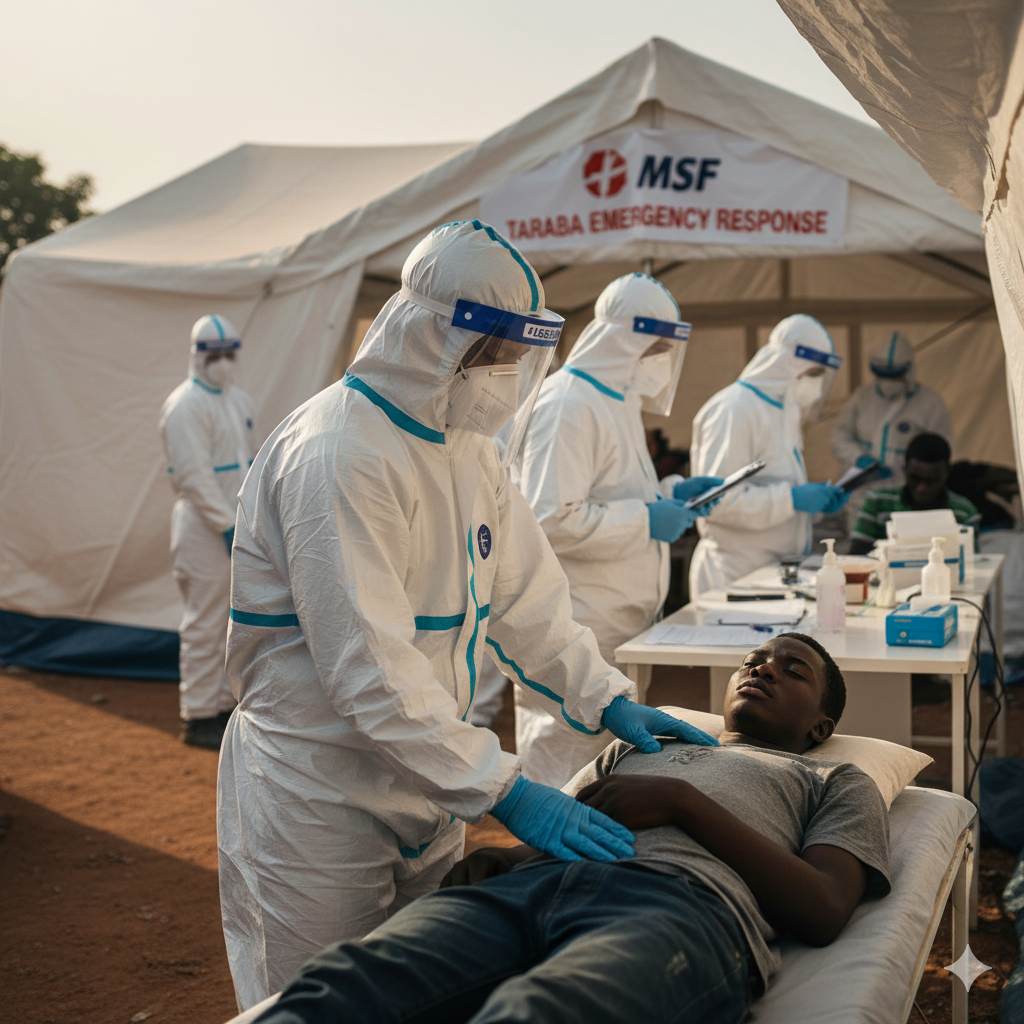
Lassa Fever Outbreak in Taraba State Prompts Emergency Health Response
A rise in Lassa fever infections in Taraba State has triggered an urgent health response from humanitarian medical teams and Nigerian health authorities.
As cases continue to increase, medical teams are racing against time to contain the spread of the deadly virus, protect healthcare workers, and ensure patients receive life-saving treatment.
The emergency intervention comes after health officials noticed a worrying increase in infections in Taraba, particularly in the state capital, Jalingo, where the Federal Medical Centre (FMC) has become a key treatment and response hub.
Working alongside the Taraba State Ministry of Health, the international medical humanitarian organization Médecins Sans Frontières (MSF) has launched a rapid response programme aimed at strengthening medical care and preventing further transmission of the disease.
This intervention is part of a wider effort to control the spread of Lassa fever across Nigeria, where thousands of suspected cases have already been recorded this year.
Rising Lassa Fever Cases Raise Public Health Concerns
Lassa fever remains one of the most dangerous infectious diseases affecting Nigeria and several West African countries.
According to data released by the Nigeria Centre for Disease Control and Prevention (NCDC), the country had recorded 2,445 suspected Lassa fever cases as of 1 March 2026.
These numbers highlight the scale of the challenge facing Nigeria’s health system, particularly in rural communities where early detection and treatment can be difficult.
The increase in cases in Taraba State has raised concerns among public health experts, as outbreaks of the disease can spread quickly when preventive measures are weak or when awareness among communities is limited.
Health authorities therefore moved quickly to conduct a rapid assessment and initiate emergency support.
Emergency Response in Taraba State
Following the rapid assessment conducted in early March, MSF launched an emergency intervention designed to strengthen the local response to the outbreak.
The intervention focuses on four critical areas.
Protecting Healthcare Workers
Healthcare workers are often the first line of defense during disease outbreaks. However, they also face a high risk of infection if proper safety measures are not in place.
The emergency programme aims to reduce exposure risks by improving the use of personal protective equipment (PPE) and strengthening safety protocols in health facilities. Protecting healthcare workers ensures that hospitals can continue providing essential care without disruption.
Strengthening Patient Care
Early diagnosis and proper medical treatment significantly improve the chances of survival for patients infected with Lassa fever.
Medical teams are working to strengthen case management systems so that patients receive timely and effective treatment. This includes improving diagnostic procedures, enhancing clinical care, and ensuring that treatment centres have the resources needed to manage severe cases.
TRAINING IN IPC: Infection Prevention & Control (IPC) in Humanitarian & Health Settings
Improving Infection Prevention and Control (IPC)
Preventing the spread of the virus within hospitals and communities is a critical part of the response. The intervention includes strengthening infection prevention and control (IPC) measures such as:
- Safe patient isolation procedures
- Proper waste management
- Improved sanitation and hygiene practices
- Training for health workers on outbreak response protocols
These measures are essential to reduce the risk of human-to-human transmission.
Community Awareness and Health Promotion
Raising awareness among communities is another key part of the emergency response. Many people in affected communities may not recognize the early symptoms of Lassa fever, which can delay treatment and increase the risk of complications.
Health promotion activities are therefore being expanded to educate communities about:
- The symptoms of Lassa fever
- How the disease spreads
- Ways to prevent infection
- When to seek medical care
Community engagement also helps reduce fear and misinformation during outbreaks.
Understanding Lassa Fever
Lassa fever is a viral haemorrhagic illness caused by the Lassa virus, which belongs to a group of viruses known for causing severe disease outbreaks. The disease was first discovered in Nigeria in 1969 and continues to pose a major health threat in several West African countries.
How Lassa Fever Spreads
The virus is primarily transmitted to humans through contact with food or household items contaminated by the urine or faeces of infected rats, particularly the multimammate rat, a rodent commonly found in West Africa.
People may become infected when they:
- Consume food contaminated by rodents
- Handle objects contaminated with rodent waste
- Live in environments with poor sanitation
The disease can also spread from person to person through contact with blood, bodily fluids, or secretions of infected individuals. Healthcare workers are particularly vulnerable if proper protective measures are not followed.
Symptoms of Lassa Fever
Lassa fever symptoms can range from mild illness to severe life-threatening conditions. Common symptoms include:
- Fever
- Weakness and fatigue
- Headache
- Sore throat
- Muscle pain
In severe cases, patients may experience bleeding from the mouth or nose, difficulty breathing, swelling of the face, or organ failure. Without early treatment, the disease can be fatal.
Why Early Treatment Matters
Early diagnosis and treatment significantly improve survival rates. One of the main treatments used for Lassa fever is Ribavirin, an antiviral medication that is most effective when administered early in the course of the illness.
However, many patients in rural areas seek treatment late, which increases the risk of complications. This is why improving community awareness and strengthening health systems are essential parts of the outbreak response.
MSF’s Broader Response Across Nigeria
The emergency intervention in Taraba is part of a broader humanitarian response to Lassa fever across Nigeria. MSF already supports the Lassa Fever Treatment Centre at Abubakar Tafawa Balewa University Teaching Hospital in Bauchi State, where specialized care is provided for infected patients.
The organization also continues to support response efforts in other states such as Kano while monitoring the situation in Benue State for possible intervention. These efforts are carried out in close collaboration with state ministries of health and national health authorities.
Read also: Hunger Crisis in Northern Nigeria: Millions of Children Struggle With Severe Malnutrition
A Growing Crisis: Why Teenage Pregnancy Is Rising in Northern Nigeria
The Importance of Preparedness
Lassa fever outbreaks occur every year in Nigeria, often during the dry season when rodents enter homes in search of food. Preparedness is therefore essential to reduce the impact of outbreaks. This includes:
- Strengthening disease surveillance systems
- Improving laboratory testing capacity
- Training healthcare workers
- Educating communities about prevention
Early detection and quick response can prevent outbreaks from escalating into major health emergencies.
Protecting Communities from Lassa Fever
Preventing Lassa fever requires both individual and community efforts. Public health experts recommend several preventive measures:
- Keeping homes clean and free of rodents
- Storing food in rodent-proof containers
- Avoiding contact with rodent waste
- Maintaining proper hygiene practices
Communities should also report suspected cases early so that health authorities can respond quickly.
A Collective Fight Against Disease
The fight against Lassa fever requires collaboration between governments, humanitarian organizations, healthcare workers, and communities. Each group plays an important role in protecting public health. By strengthening health systems, raising awareness, and improving access to treatment, Nigeria can reduce the impact of Lassa fever outbreaks and protect vulnerable communities.
Conclusion
The recent surge in Lassa fever cases in Taraba State serves as a reminder of the ongoing public health challenges facing Nigeria. With thousands of suspected infections reported nationwide, rapid response efforts are essential to contain the disease and save lives.
Through collaboration between humanitarian organizations like MSF and Nigerian health authorities, critical steps are being taken to strengthen healthcare services, protect medical staff, and educate communities. While the outbreak remains a serious concern, coordinated action and increased awareness can help reduce the spread of Lassa fever and ensure that affected communities receive the care and support they need.